
.png)
Salvador Trade School History
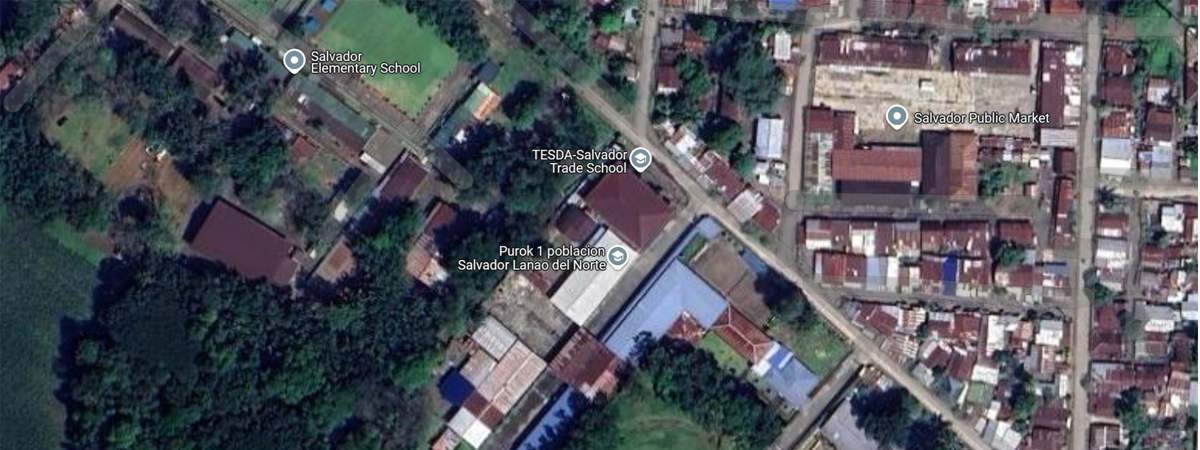
In 1965, during one of the routine visits of the late Congressman Laurentino Badelles, former Mayor Antonio Abadiano—an agricultural graduate of Central Luzon Agricultural College—formally proposed the establishment of an agricultural school in the Municipality of Salvador, Lanao del Norte. The primary objective of the proposal was to provide affordable secondary education to the sons and daughters of poor farmers through technical and vocational training that would be both economical and practical.
Due to the abundance of water supply from the Inasagan and Cabongbongan Springs, now known as Camp Allere, the community unanimously recommended the area as the proposed school site. Before leaving for Iligan City, Congressman Badelles instructed Mayor Abadiano to secure approval for the school site while he continued preparing the draft of the proposed bill.
Despite the noble intent of the project, several landowners were initially reluctant to part with their property, even with government compensation. Many had struggled to acquire land for their families and were hesitant to surrender ownership. As a result, the draft bill was submitted without a confirmed school site. Congressman Badelles later expressed willingness to amend the bill, noting that only eight hectares of land would be required.
In January 1965, Congressman Badelles sponsored House Bill No. 8376, which successfully passed the third reading in both the House of Representatives and the Senate. The bill was approved as Enabling Act No. 4440 on June 19, 1965. However, its implementation was delayed due to political transitions within the local government.
During this period, Mayor Abadiano was succeeded by Mayor Apolonio Yap, who strongly supported the opening of the trade school. However, Father Reilly, administrator of a private school, requested that his institution be allowed to graduate its first batch of fourth-year students before a government school commenced operations, citing significant investments already made. Mayor Yap was later replaced by Mayor Pangantapan Tawantawan, during whose term economic conditions worsened, resulting in increased tuition fees in private schools and further limiting access to secondary education for poor farming families.
In response, civic-minded citizens of Salvador convened to discuss the urgent need for a government secondary school. The Municipal Council unanimously resolved to petition Congressman Dimaporo to allocate funds for the establishment of a trade school in the municipality.
Salvador Trade School was formally opened on July 6, 1971. The institution initially operated with four teachers and seven support staff, serving an enrollment of 72 students. Classes were temporarily held at the Salvador Central Social Hall under the administration of the late Superintendent Sangki Singayao and the direct supervision of Principal Pawadji H. Hadja. The school was allocated an annual appropriation of ₱50,000.00.
On August 9, 1971, armed conflict between Christian and Muslim groups erupted in the municipality, prompting the evacuation of residents, including students and school personnel. By August 24, 1971, upon the discretion of Superintendent Singayao and with approval from the Director of the Bureau of Vocational Education, the teachers and support staff were temporarily relocated to Maigo School of Arts and Trades in Maigo, Lanao del Norte. There, they underwent skills training under the supervision of Principal Maximo Aguaviva, Jr.
Meanwhile, the supply officer and remaining personnel, assisted by military units, immediately began constructing the school’s first building in Salvador. On October 4, 1971, teachers were recalled and resumed classes at Maranding Elementary School in Lala, Lanao del Norte, serving 24 remaining students from the displaced population.
In January 1972, classes officially returned to Salvador Trade School, with employees occupying the newly completed building. Enrollment stood at 75 students, reflecting a modest increase. The annual appropriation rose to ₱103,035.00. By school year 1973–1974, enrollment increased to 195 students, with an appropriation of ₱135,265.00, and two buildings had already been constructed.
Continued growth was observed in subsequent years. Enrollment reached 225 students in 1974–1975 with an annual appropriation of ₱231,567.00, during which a two-storey Related Subjects Building was constructed but left unfinished. In 1975–1976, enrollment increased to 275 students, with ₱274,000.00 allotted, allowing for the construction of a two-unit prefabricated Boys’ Shop Building and a principal’s cottage, both unfinished. In 1976–1977, a Girls’ Trade Building and another two-unit prefabricated structure were also constructed, though similarly incomplete, with reduced funding.
By school year 1996–1997, Salvador Trade School operated under a national budget of ₱3,856,124.00 for Personal Services and ₱378,504.00 for Maintenance and Other Operating Expenses (MOOE). The school was classified as a Technical-Vocational Institution, administratively supervised by the Technical Education and Skills Development Authority (TESDA) Region XII, based in Cotabato City.
At this time, the institution offered ten post-secondary Technical-Vocational Education programs administered by TESDA, alongside the Modified Secondary Education Development Program (SEDP) supervised by the Department of Education, Culture and Sports (DECS).
The school maintained 39 plantilla positions, including 16 administrative, supervisory, and support staff, and 23 teaching personnel. Of the teaching staff, 12 were assigned to technical vocational programs. During school year 1997–1998, approximately 30 percent of the total enrollment comprised post-secondary students.
Following the enactment of the TESDA Law mandating the separation of secondary and technical education, and with approval under the General Appropriations Act, secondary education programs and personnel were fully transferred to the Department of Education. On October 23, 2001, a Memorandum of Agreement was signed between TESDA and the Department of Education Region XII, dividing the eight-hectare school property equally between the two agencies.
After rationalization, the institution retained 12 teaching personnel and 10 administrative and support staff under TESDA. Budgetary allocations for personnel transferred to the Department of Education were likewise reassigned. Facilities and buildings were maintained by the respective agencies based on land designation.
Under TESDA administration, Salvador Trade School underwent significant development. The annual MOOE increased from ₱378,504.00 to approximately ₱3,000,000.00, enabling the acquisition of modern tools, equipment, and training facilities. Several workshops and laboratories were rehabilitated, and the school became a recipient of the TESDP–ADB Project, further enhancing its training capacity.
All regular programs were registered under the Unified TVET Program Registration and Accreditation System (UTPRAS), and the institution was awarded a Bronze Award under the Philippine Quality Award (PQA) framework, affirming its commitment to quality technical education and skills development.